For rabbits
- Use chicken wire fencing at least 3 feet high.
- Fence off entire garden areas, or focus on the specific plants being hit.
- Garden cloches are a great option for protecting individual plants.
How to keep rabbits and deer from eating your new landscape, and how to cage and wrap plants before a Minnesota winter.
The buffet problem
We understand how frustrating it can be to step outside and find your newly installed garden has become a buffet for the local wildlife.
While it is difficult to make your landscape fully “critter-proof,” there are several ways to discourage rabbits and deer from eating their way through your new landscape. The three that work, especially used together, are repellents, fencing and winter wrapping.
Timing matters more than product choice. Repellents work best applied before animals establish their eating habits, and winter protection needs to be on before food gets scarce.
Winter protection, demonstrated
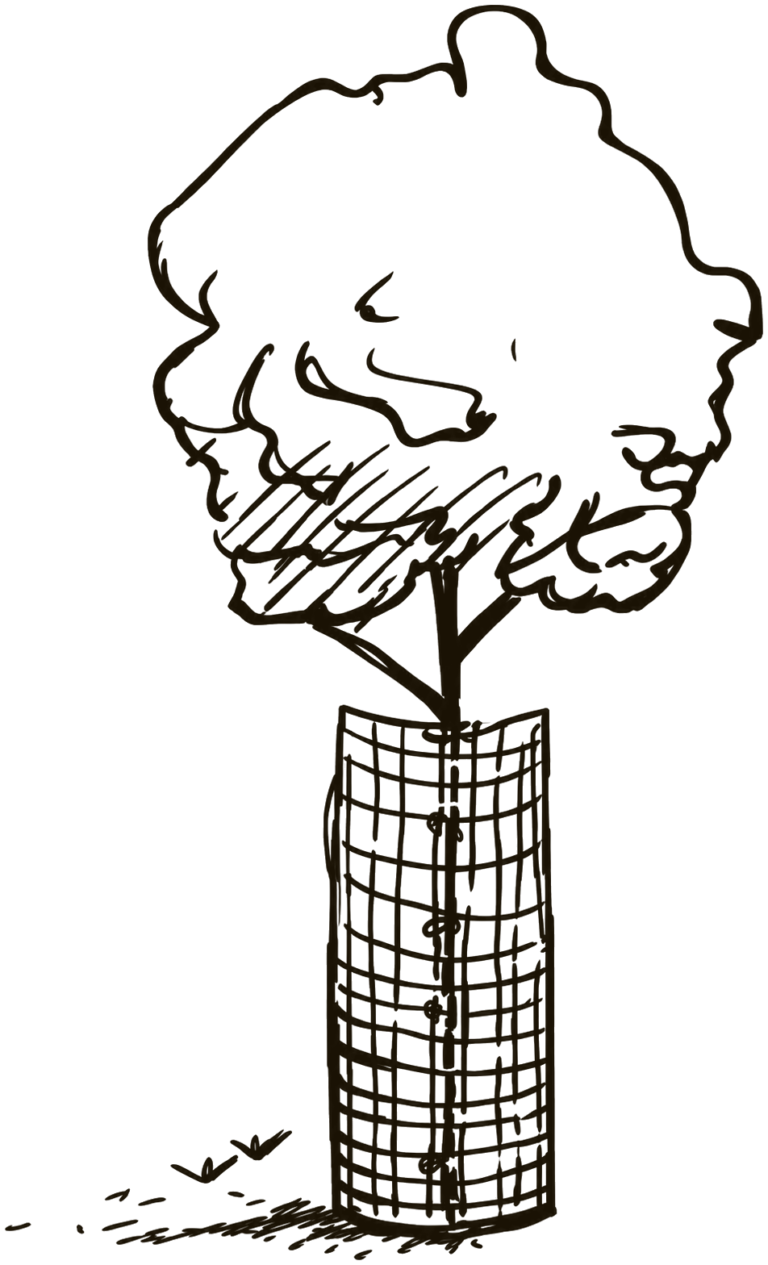
Two of our designers walk through winter protection for trees and shrubs, using chicken wire and tree tubes you can pick up at any hardware store. It is the third of the three layers below; repellents and fencing do the work the rest of the year.
Thin bark, and what girdling does to a tree by spring.
How it goes on, and taking it off again in April.
Basic chicken wire for shrubs and multi-stemmed trees.
Weaving a stake through the wire so it holds all winter.
Keeping the edge tight to the ground so nothing gets under.
Layer one
Animal repellents help protect your plants without being harmful to critters. They use scents and tastes that animals prefer to avoid, helping to create a boundary they won’t want to cross.
Apply as soon as your landscape is installed, before animals establish their eating habits.
Heavy rain and watering wash repellents off. Reapply once things dry out.
Switching between formulas keeps critters from adapting to any one of them.
Animals are most active then, so that is when a fresh boundary does the most work.
Natural food sources are scarce, which makes your plants that much more tempting.
Layer two
Sometimes a physical barrier is the most effective way to keep animals out, and when used with repellents it can be a great deterrent.
Layer three
Winter means reduced food sources for animals. Plants that retain an above-ground presence, meaning trees and shrubs, suddenly become a tempting meal.
Young trees have thin bark. A hungry rabbit chewing it in winter can girdle the trunk all the way around, and in spring the tree can no longer move water and nutrients up. That is why tree tubes go on first.
With most trees and shrubs this is something you may only need to do for the first few years, but it may be worth continuing for your more vulnerable or high-value plants.
Also watch for
Intense winter sun warms the outer bark and the fluids in the tree start to move. When temperatures drop overnight those fluids freeze and expand, cracking the bark and opening an entry point for disease and insects.
Tree wrap and tubes also protect light-colored, smooth-bark trees from sunscald.
Cold winter wind pulls moisture out of needles and the frozen soil means the plant can’t replace it, so the needles dry out.
Water evergreens deeply right up to the date the ground freezes so they store ample moisture.

Your year, in order
Protection is a rhythm, not a one-time task. Here is the whole year on one screen.
April – May
June – August
September – November
December – March
Straight answers
The questions Twin Cities homeowners ask us most about rabbits, deer and winter damage.
Use chicken wire fencing at least 3 feet high, either around whole garden areas or around the specific plants being eaten, and pair it with a repellent applied before rabbits establish their habits. Garden cloches work well for protecting individual plants.
At least 6 feet. When you are fencing trees and shrubs, set the fence back far enough that deer cannot reach over the top and nibble the plant.
Put tree tubes, tree wrap and chicken wire caging on in late fall, before the ground freezes and before natural food sources disappear. Remove all of it during your spring clean up. If you are in a particularly rabbit or deer heavy area, you may choose to leave some of the caging up year-round.
No. Repellents work with scents and tastes that animals prefer to avoid, creating a boundary they will not want to cross rather than causing harm.
The first three to five years are the most critical. Once plants are established they can withstand some light browsing, though it is worth continuing to protect vulnerable or high-value trees and shrubs.
Sunscald happens when winter sun warms the bark, fluids in the tree begin to move, and an overnight temperature drop freezes them so the bark cracks. Tree wrap and tubes prevent it on smooth, light-colored bark. Winter burn happens when wind pulls moisture from evergreen needles that frozen soil cannot replace, so water evergreens deeply until the ground freezes.
Yes. Every Field client gets the Field Manual, which covers critter control and winter protection in detail, and we are happy to look at what is being browsed and advise on the right approach for your specific plants. Email designers@fieldoutdoorspaces.com.
Not sure what’s eating it?
Browsing damage is easy to misread. Email a picture of the plant and we’ll tell you what is doing it, whether it needs caging now, and what to buy.